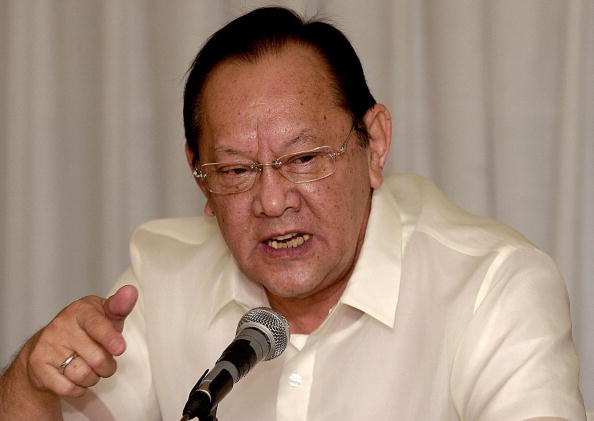
Eduardo Cojuangco Jr.'s Remarkable $1.4 Billion Net Worth: Unpacking the Legacy of San Miguel's Visionary Chairman
Eduardo Cojuangco Jr., a towering figure in Philippine business and politics, left an indelible mark on his nation's economic landscape. Renowned as the long-time chairman of San Miguel Corporation, his influence stretched across various sectors, culminating in a reported net worth of $1.4 billion. This impressive figure not only highlights his personal financial success but also reflects the vast scope and power of the conglomerate he helmed. Often referred to as "Danding," Cojuangco's journey from a politician in Tarlac to an industrial magnate paints a compelling picture of ambition, strategic acumen, and deep-seated national impact.
His business empire, at its zenith, was once estimated to account for a significant 25% of the Philippines' gross national product. This extraordinary statistic underscores the profound influence he wielded over the nation's economy, shaping industries, creating jobs, and driving development. Understanding The Billionaire Behind 25% of PH GDP: Eduardo Cojuangco Jr.'s Fortune requires a closer look at the key pillars of his success and the pivotal roles he played in both the corporate boardroom and the political arena.
The Architect of an Empire: San Miguel and Beyond
At the heart of Eduardo Cojuangco Jr.'s immense wealth and influence was his leadership of San Miguel Corporation. Born in June 1935 in Paniqui, Tarlac, Philippine Islands, Cojuangco rose to become the chairman of what is widely recognized as the largest food and beverage corporation in the Philippines and indeed, one of the most dominant in Southeast Asia. Under his stewardship, San Miguel evolved from a regional powerhouse into a diversified conglomerate with interests spanning food, beverages, packaging, energy, infrastructure, and more.
Managing a company of San Miguel's scale requires not just business acumen but a profound understanding of market dynamics, strategic investment, and operational efficiency. Cojuangco's tenure saw San Miguel expand its product lines, penetrate new markets, and consolidate its position through shrewd acquisitions and partnerships. The company's vast portfolio includes iconic brands deeply embedded in the everyday lives of Filipinos, from beer to processed meats and dairy products. This pervasive presence in consumer markets generated substantial revenue and profit, directly contributing to Eduardo Cojuangco Jr.'s net worth and solidifying his status as a key economic driver.
His vision for San Miguel extended beyond traditional food and beverage, pushing the corporation into sectors like power generation and infrastructure development. This diversification strategy was instrumental in insulating the company from market fluctuations in any single industry and positioned it for sustained growth across a broader economic spectrum. The expansion into energy and infrastructure, for instance, tapped into the fundamental needs of a developing nation, providing stable income streams and strategic leverage. Such bold strategic moves are characteristic of a leader with a long-term vision, understanding that true empire-building involves anticipating future needs and laying foundational investments.
A Political Journey: From Tarlac to Presidential Aspirant
Eduardo Cojuangco Jr.'s life was not solely confined to the boardroom; his political career was equally significant, intertwining with his business interests and amplifying his influence. His foray into politics began early, serving as the Governor of Tarlac from 1967 to 1969. Following this, he represented Tarlac's First District as a Member of the Philippine House of Representatives from 1969 to 1972. These early political roles provided him with invaluable insights into governance, public administration, and the intricate relationship between government policy and economic development.
The synergy between his political connections and business ventures was a recurring theme in his career. While such close ties are common in many developing economies, Cojuangco's ability to navigate these complex waters set him apart. His political stature provided a platform for advocating policies that could potentially benefit his vast business interests, while his economic power undoubtedly bolstered his political campaigns and influence.
His political ambitions culminated in a bid for the Philippine presidency in 1992. Despite a strong showing, he finished second in the elections. This presidential campaign was a testament to his national prominence and the widespread recognition of his influence. Though unsuccessful in securing the highest office, the campaign itself underscored his capacity to mobilize significant resources and command a substantial following. In the wake of the election, he founded the Nationalist People's Coalition (NPC) in 1992, a political party that remains a significant force in Philippine politics to this day, with Cojuangco serving as its chairman emeritus.
The establishment of the NPC solidified his lasting political legacy, demonstrating his commitment to shaping the nation's future even after his direct electoral attempts. This dual existence as a business magnate and a political kingmaker cemented his status as a uniquely powerful figure in the Philippines.
Navigating the Currents of Controversy: The Coco Levy Fund
Like many figures of immense wealth and power, Eduardo Cojuangco Jr.'s journey was not without its share of controversies. Perhaps the most significant of these was his name being "dragged in the Coco Levy Fund Controversy," as noted in reports. This dispute centered around funds collected from coconut farmers during the Marcos era, ostensibly for the development of the coconut industry.
The controversy involved allegations regarding the disposition and utilization of these funds. According to reports, his name was associated with the dispute of the funds, with claims that the funds ultimately went to the Marcos family and their known associates. Furthermore, the government reportedly asserted that he used a significant portion of the coconut levy funds to gain control of a 72% stake in the United Coconut Planters Bank (UCPB). These allegations painted a complex picture, highlighting the intersection of business, politics, and public trust during a tumultuous period in Philippine history.
The Coco Levy Fund saga became a prolonged legal and political battle, symbolizing broader questions about cronyism and accountability during that era. While the specifics are highly contested and complex, this controversy remained a notable part of Cojuangco's public narrative, often intertwined with discussions about his wealth acquisition and business empire. For a deeper understanding of these complexities, one might explore resources detailing Eduardo Cojuangco Jr.'s Net Worth & Controversial Business Empire.
Understanding such controversies is crucial for a complete picture of influential figures. They often reflect the challenges of operating vast businesses within a developing political landscape, where lines between private enterprise and public interest can sometimes become blurred or disputed.
Legacy and Impact: Beyond the Billions
Eduardo Cojuangco Jr.'s net worth of $1.4 billion is a testament to his extraordinary capabilities as a businessman and strategist. However, his true legacy extends far beyond mere financial figures. He was a quintessential figure in the narrative of Philippine economic development, representing a generation of entrepreneurs who built formidable conglomerates and significantly shaped the nation's industrial landscape. His leadership at San Miguel Corporation provided countless jobs, fostered economic growth, and introduced modern business practices to various sectors.
His journey also offers insights into the unique challenges and opportunities present in emerging markets. Building an empire that, at one point, accounted for a quarter of the country's GDP speaks volumes about his vision and execution. It highlights the strategic importance of diversification, the impact of political engagement, and the necessity of long-term planning in the face of dynamic economic and political environments. For aspiring business leaders, Cojuangco's career underscores the profound influence that a single individual can wield when armed with ambition, acumen, and strategic relationships.
The intersection of his business and political careers, while controversial at times, illustrates a common reality in many parts of the world: that economic power and political influence often go hand-in-hand. His ability to navigate these interconnected spheres for decades speaks to a remarkable resilience and adaptability. Even in retirement from active roles, his influence through institutions like the Nationalist People's Coalition continued to resonate, showcasing a deep and lasting imprint on the fabric of the Philippines.
Conclusion
Eduardo Cojuangco Jr.'s $1.4 billion net worth is more than just a number; it is a symbol of a powerful legacy carved out through decades of business leadership and political engagement. As the chairman who transformed San Miguel Corporation into an indomitable force across Southeast Asia, he played a pivotal role in the economic narrative of the Philippines. From his early days as a Tarlac politician to his presidential bid and the founding of a major political party, his life was a tapestry woven with ambition, influence, and strategic prowess. While controversies like the Coco Levy Fund remain a part of his story, his unparalleled impact on the Philippine economy and industrial development ensures his place as one of the nation's most formidable and influential figures. His journey serves as a powerful case study in the complexities of wealth creation and nation-building in a rapidly evolving global landscape.
